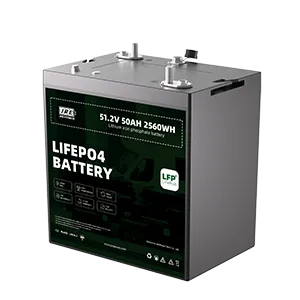
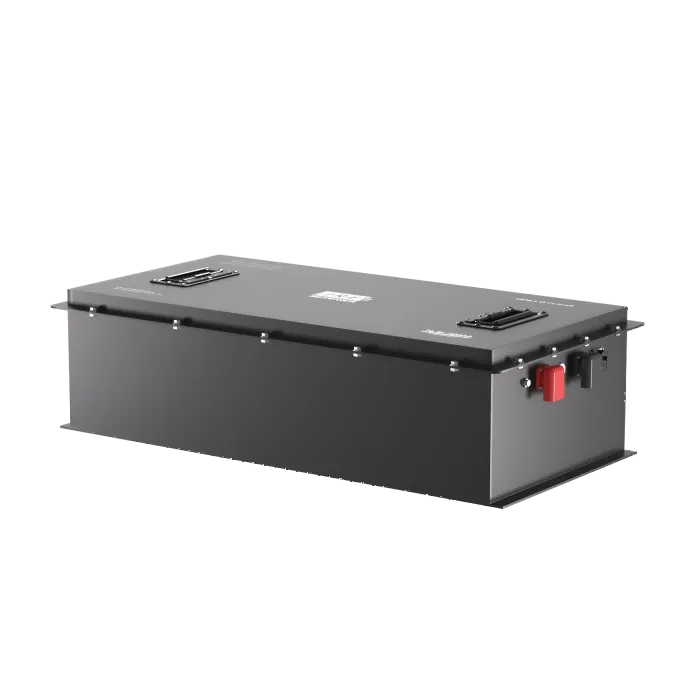
A commercial floor scrubber can look relatively simple from the outside, but its battery works under a demanding operating pattern. The machine may run for several hours, stop for charging and return to service again with little room for unexpected downtime. For cleaning contractors, facility operators and equipment distributors, battery selection therefore affects much more than runtime.
When replacing lead-acid batteries or sourcing lithium batteries for new cleaning equipment, buyers should evaluate voltage, usable capacity, discharge current, charger compatibility and physical installation together. Choosing on amp-hours alone can result in a battery that looks correct on paper but does not work properly with the machine.
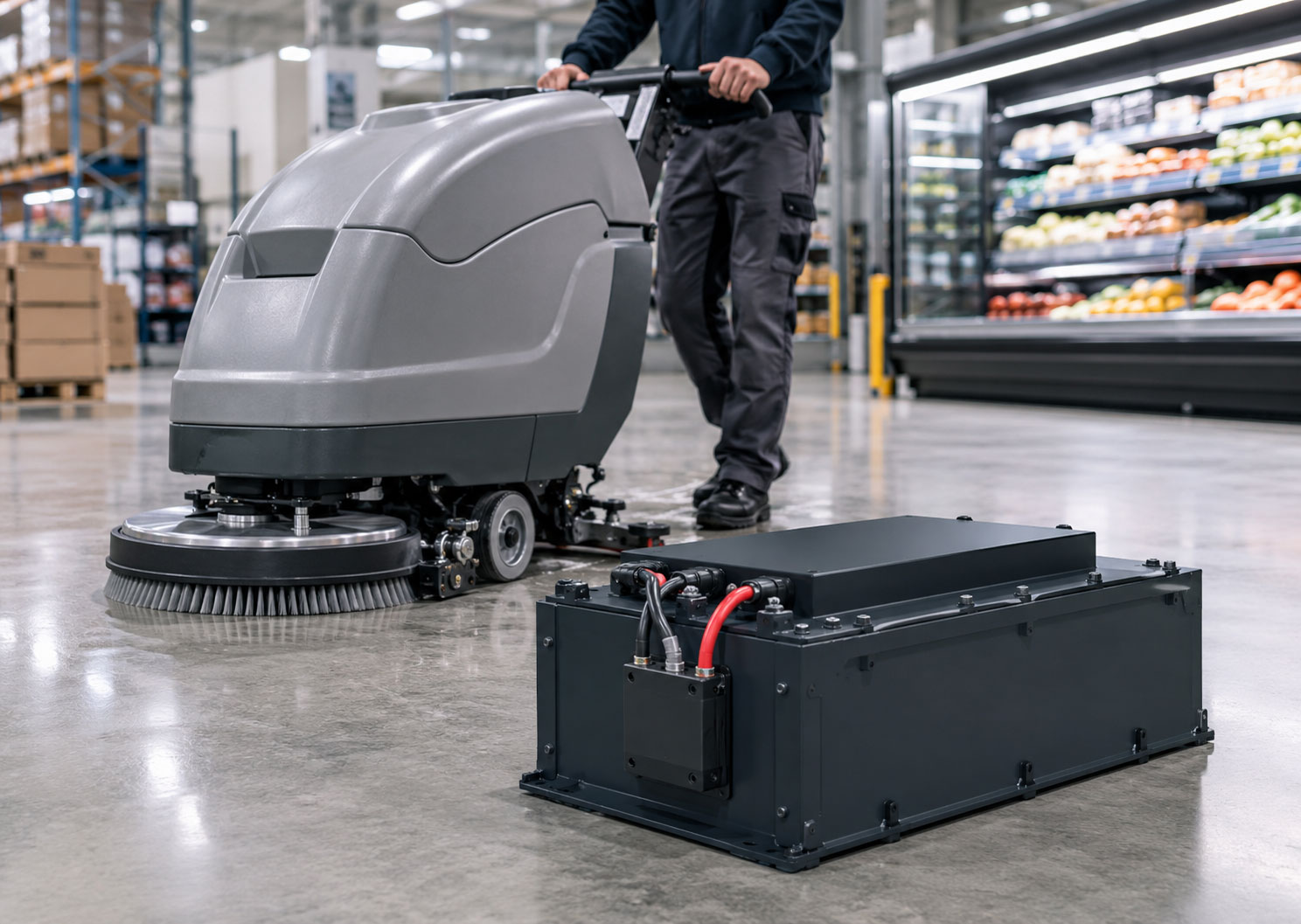
Many commercial scrubbers and sweepers use 24V electrical systems, which explains why buyers frequently search for a 24v industrial battery for cleaning equipment. However, 36V systems are also used, particularly where higher output is required.
The existing JREPower floor-cleaning range includes 24V 150Ah, 24V 200Ah and 36V 200Ah LiFePO4 configurations. This makes voltage the first specification to verify. A replacement battery should match the machine's controller and charging architecture rather than being selected simply because it fits the battery compartment.
Amp-hour capacity determines how much charge a battery can store, but the useful number for a fleet manager is how long the machine can complete real cleaning work before charging.
Two scrubbers using the same nominal voltage can have very different energy requirements. Brush motors, vacuum systems, traction motors, machine weight and floor conditions all affect consumption. A large warehouse running a ride-on scrubber continuously has a different duty cycle from a compact machine cleaning a retail store for a few hours each evening.
Before ordering a floor cleaning machine battery, buyers should therefore provide the original battery specifications together with expected operating hours. Where available, actual current or energy-consumption data is even more useful.
The battery management system is central to lithium battery operation. It monitors pack conditions and provides protection when voltage, current or temperature moves outside the intended operating range.
JREPower's floor-cleaning battery range uses an intelligent BMS designed to provide protection against conditions such as overcharge, over-discharge, overcurrent and short circuit. The company's product page also emphasizes thermal stability and structural protection for equipment operating in demanding environments.
For fleet buyers, the practical question is whether the BMS has been selected around the machine's load. A scrubber can draw substantially more current during acceleration or when several electrical functions are running at the same time. Peak-current requirements should therefore be discussed before a battery pack is approved.
Replacing lead-acid with lithium is not always a drop-in process. The charger's voltage profile must be suitable for the new battery chemistry and configuration. Continuing to use an incompatible charger can lead to incomplete charging or unwanted interaction with battery protection functions.
Buyers should confirm charger output voltage, maximum charging current and connector arrangement. If an equipment fleet contains several machine models, standardizing compatible battery and charger combinations can also make maintenance easier.
A cleaning contractor purchasing one replacement battery has different priorities from a distributor or OEM purchasing batteries repeatedly. Commercial buyers need dimensional consistency, repeatable electrical performance, documentation and reliable production control across different batches.
This is one reason procurement teams often evaluate motive power battery manufacturers rather than comparing individual battery prices alone. A lower initial unit price offers limited value if dimensions, connectors or operating characteristics change between deliveries.
International buyers should also confirm applicable battery testing and shipping documentation. UNECE Section 38.3 establishes transport testing procedures for lithium batteries, while IATA publishes guidance for battery shipments moving by air.
Instead of sending a supplier only “24V 200Ah battery required,” include the cleaning-machine model, original battery voltage and dimensions, connector type, maximum current, desired runtime, charger information and annual purchasing volume.
That information allows the supplier to assess the application properly and reduces unnecessary revisions after sampling. For fleets, distributors and equipment manufacturers, this specification-first approach is usually the most effective way to control downtime and improve long-term battery procurement.
Commercial scrubbers and sweepers can use lead-acid or lithium batteries in several voltage and capacity configurations. The correct battery depends on the machine's electrical system and operating requirements.
Often yes, but voltage, charger compatibility, dimensions, connectors and maximum current must be checked before conversion.
Not automatically. The larger-capacity battery may provide longer runtime, but size, weight, charger capability and actual energy demand should determine the final choice.
Ask about BMS protection, current ratings, cycle specifications, physical tolerances, charger compatibility, testing documentation and production consistency.
Occupational Safety and Health Administration. (2026). Lithium-Ion Battery Safety Fact Sheet. U.S. Department of Labor.
UL Solutions. (n.d.). Battery Module and Pack Testing for Manufacturers. UL Solutions.
United Nations Economic Commission for Europe. (2023). UN Manual of Tests and Criteria, Revision 8. United Nations.
 Air-Cooled vs. Liquid-Cooled Storage: Industrial & Commercial Energy Storage Thermal Management ComparisonJuly 22, 2026In energy storage system design, thermal management is the core factor determining battery performance, service life, and operational safety. As cells evolve toward larger capacity and higher energy d...view
 Standardized Operation Procedures for Full-Process Photovoltaic Power Station O&MJuly 22, 2026Chapter 1 General Provisions (O&M Objectives, Scope of Application, Core Principles)1.1 O&M Objectives and SignificanceIn order to unify the full-process operation standards for daily inspec...viewUltimate Analysis of Energy Storage Selection: Centralized vs. String-Level BESS Beyond Wiring Differences — The Core is Control Granularity CompetitionJuly 22, 2026In energy storage project design and equipment selection, centralized and string-level BESS (Battery Energy Storage Systems) are the two dominant technical routes. Many practitioners have long held a ...view
 The ultimate showdown in the trillion-watt energy storage race: 587 Ah versus 684 Ah – who will dominate the next-generation battery cell standard?June 24, 2026The core competitiveness in the energy storage industry has long transcended mere capacity expansion and price competition; the authority to define industry standards remains the decisive factor in th...view
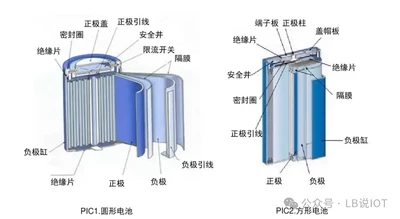 Safety First: A Multidimensional Strategy Analysis for Enhancing Lithium-ion Battery SafetyMarch 31, 2026Application and Safety Issues of Lithium-ion Batteries: Lithium-ion batteries are widely used due to their high energy density, high output power, and high average output voltage. However, accidents ...view
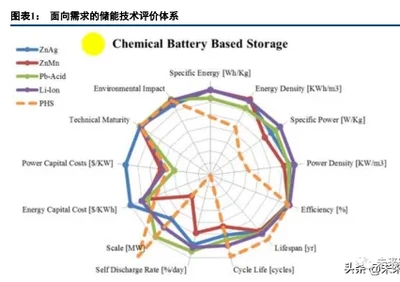 Deep Report on Lithium Battery Industry: A Collection of Battery Technology ProspectsJanuary 13, 2026Energy storage technology is fundamentally a technology that caters to demand, and its evaluation indicator system encompasses energy indicators, power indicators, scale indicators, lifespan indicators, ...view
 EN
EN
 ru
ru