In energy storage project design and equipment selection, centralized and string-level BESS (Battery Energy Storage Systems) are the two dominant technical routes. Many practitioners have long held a misconception: they believe the difference between the two lies solely in wiring and current-collecting methods. In reality, wiring topology is merely a surface-level difference. The true core of competition is the difference in control granularity of the energy storage system—specifically, the essential distinction in the precision of battery cluster management and control, fault tolerance capability, and O&M logic. Choosing the right architecture directly determines the energy storage power station's initial investment, operational stability, capacity utilization rate, fault tolerance capability, and full lifecycle revenue. This article, drawing on the latest national standards and industry policies, systematically explains the underlying logic, advantages and disadvantages, and suitable application scenarios of both solutions in accessible language, helping readers make precise selections and avoid engineering pitfalls.
A complete electrochemical energy storage system is a clearly layered hardware and software integration. The full chain is: Battery Cells -> Modules -> Battery Clusters -> BMS (Battery Management System) -> High-Voltage Junction Box -> Current-Collection Cabinet -> PCS (Power Conversion System) -> Transformer -> EMS (Energy Management System), along with supporting auxiliary systems such as temperature control, fire protection, and safety monitoring. The core functions of each key component are as follows:
Battery Cells: The core carrier for energy storage, responsible for energy storage and release.
BMS: Real-time monitoring of battery voltage, current, temperature, SOC (State of Charge), and SOH (State of Health); executes battery safety protection logic.
PCS: Achieves bidirectional AC/DC conversion; the core equipment for energy storage power regulation.
EMS: The upper-level dispatch core; coordinates the full-station charging and discharging strategy, interfaces with grid dispatch and price arbitrage.
All differences between centralized and string-level energy storage are concentrated at the interface between battery clusters and the PCS: Does each battery cluster first perform DC parallel connection and then unified power conversion, or does each independently convert power before AC-side collection and grid connection? This small topological difference opens up a huge gap in the operational capabilities of the two systems.
Centralized energy storage is the mainstream solution for traditional large-scale energy storage power stations, with many years of technology deployment and extremely high standardization.
Multiple battery clusters are first parallel-connected on the DC side for unified current collection, then connected to a single high-power centralized PCS. All battery clusters across the station simultaneously receive unified power control.
Chain: Battery Clusters -> DC Collection Cabinet -> Centralized PCS -> Step-Up Transformer -> Grid
The core competitiveness of centralized energy storage is concentrated in two major dimensions: low cost and high maturity:
Significant Cost Advantage: A single high-power PCS has a lower unit-power cost; fewer equipment units, simpler wiring, and lower auxiliary material consumption can effectively reduce the project's initial investment.
Mature Engineering System: Applied in large-scale energy storage projects for a long period; the entire process from design, construction, commissioning, and acceptance is highly standardized, with a low O&M barrier.
Suitable for Standardized Projects: With uniform battery cell batches, good battery cluster consistency, and simple operating strategies, projects run stably with high delivery efficiency.
The operating logic of centralized energy storage relies highly on the consistency of all battery clusters, giving it a natural weakness: the performance of the entire system is entirely determined by the worst-performing battery cluster.
In the early stage of project operation, battery cluster status differences are small and the system runs without obvious problems. However, as operating years increase, the cycle counts, operating temperatures, and degradation rates of each battery cluster gradually diverge, with internal resistance and SOC deviations continuously widening:
During charging: when a single cluster reaches its voltage upper limit first, the entire station is forced to stop charging.
During discharging: when a single cluster exhausts its energy first, the entire system shuts down prematurely.
The remaining energy in healthy battery clusters cannot be released, and the system capacity utilization rate decreases year by year.
At the same time, centralized energy storage has extremely poor fault isolation capability. When a single cluster triggers a protection event, it can cause the entire cabinet or even the entire station to shut down, directly impacting the power station's power generation revenue.
String-level energy storage borrows the control logic from PV string management. Its core breakthrough is下沉 (moving down) power control and safety protection capabilities to the individual battery cluster level, fundamentally solving the loss problems caused by inter-cluster inconsistency. In the industry, it is also called distributed PCS or intelligent cluster-level energy storage. Different names, but the same underlying logic.
Abandoning the DC hard-parallel connection mode of battery clusters, each battery cluster is equipped with an independent DC/DC module or independent PCS channel. After each independently completes power conversion, they are unified and connected to the grid on the AC side, achieving electrical decoupling between clusters.
Compared with centralized energy storage, the core value of string-level energy storage is reflected in long-term operational stability and high revenue:
Tolerates Battery Differentiation, Higher Capacity Utilization Rate: The system can independently regulate power for each cluster; well-performing battery clusters operate at full load, while aged, high-temperature, or low-SOC weak clusters are automatically current-limited and de-rated. This completely eliminates the problem of a single cluster dragging down the entire machine, perfectly adapting to scenarios of battery gradual degradation and mixed use of new and old batteries for expansion.
Independent Fault Isolation, Higher Power Station Availability: When a single cluster or power module fails, only the corresponding faulty branch is removed; all other equipment continues normal operation, greatly reducing shutdown duration and revenue loss.
Suitable for Complex Operating Conditions: Can precisely respond to grid frequency regulation, short-term high-power dispatch, multi-period price arbitrage, and other refined scenarios; control and regulation flexibility far exceeds that of centralized solutions.
High performance comes with higher cost. String-level energy storage requires more equipment units, more complex wiring and control systems, higher project initial investment, and correspondingly higher requirements for construction and O&M professionalism.
Many people get caught up in the difference in current-collection methods, but the collection topology is merely the external form. The essential dividing line between the two solutions is control granularity: centralized is unified, crude management of the entire station; string-level is precise, refined management of each individual cluster.
Comparison Dimension | Centralized Energy Storage | String-Level Energy Storage |
Collection Position | Parallel connection and collection on DC side first, then unified entry into PCS | Each cluster independently converts power, AC-side collection and grid connection |
Equipment Configuration | Single high-power PCS serving multiple battery clusters | Each battery cluster matched with an independent power conversion unit |
Inter-Cluster Relationship | DC hard parallel connection, no electrical isolation | Power device decoupling, clusters independently controllable |
Control Logic | Unified management of entire station, crude regulation | Independent regulation per cluster, refined management |
Fault Impact | Single cluster fault -> entire machine shutdown | Single cluster fault -> only local isolation |
There is no 'which is more advanced' between centralized and string-level energy storage—only two different engineering trade-offs: one sacrifices long-term refined capability for lower cost; the other sacrifices initial cost-performance for higher full-lifecycle revenue.
Selection Criteria | Guidance |
Core Demand | Strictly control initial investment, rapid large-scale deployment -> PRIORITIZE centralized |
Suitable Scenarios | Centralized: Standardized large-scale ground-mounted storage, ordinary distribution network storage, simple peak-valley arbitrage projects |
Operating Conditions | Centralized: Stable working conditions, single charging/discharging strategy, good battery consistency |
National energy storage policies and new national standards over the past two years have clearly guided industry development direction and directly influenced the selection trends of both solutions. Refinement, high safety, and high utilization rate have become core requirements:
September 2025: The Action Plan for Large-Scale Construction of New Energy Storage (2025–2027) was issued, setting a target of exceeding 180GW of new energy storage installed capacity by 2027. While expanding at scale, it emphasizes improving energy storage safety and resource utilization efficiency.
January 2026: The national capacity pricing mechanism for energy storage was implemented, forming a three-part revenue model of 'capacity + energy + ancillary services.' Power station availability and actual usable capacity directly determine project revenue; the long-term revenue advantage of string-level energy storage continues to grow.
April 1, 2026: The new Design Standard for Electrochemical Energy Storage Power Stations (GB/T 51048-2025) was officially implemented, explicitly requiring energy storage batteries to adopt modular design and reduce the number of battery cluster DC parallel connections. From a regulatory perspective, this favors the cluster-level independent control of string-level solutions.
May 2026: The Quality Supervision Outline for New Energy Storage Power Station Construction Projects was released, strengthening full-process quality control for energy storage and setting higher standards for battery stability and fault isolation capability.
Market data also confirms the trend: in the 2025 5GWh energy storage centralized procurement by State Power Investment Corporation, string-level energy storage accounted for 20%, officially becoming a mainstream solution. It is projected that global string-level PCS shipment share will rise to 35%–40% in 2026, with penetration rates continuing to climb.
Surface-Level Difference: Centralized and string-level energy storage differ in DC vs. AC current-collection methods.
Core Essence: It is a competition in control granularity of the energy storage system — unified crude management of the entire station vs. refined independent management of each individual cluster.
Centralized Advantages: Mature technology, low cost, suitable for standardized large-scale projects. Weaknesses: relies on battery consistency, high long-term capacity loss, prone to entire-machine shutdown from faults.
String-Level Advantages: Inter-cluster decoupling, strong fault tolerance, high capacity utilization rate, excellent fault isolation capability, stable long-term revenue. Weakness: higher initial investment cost.
Core Selection Logic: Do not blindly follow advanced technology. For short-term, low-cost standardized projects, choose centralized. For long-term operation pursuing high availability and high revenue with refined management, prioritize string-level.
Personal views for reference only.
 Powering the Future: The Rise of Li-ion Battery TechnologyJanuary 21, 2026IntroductionIn today’s electrified world, the Li-ion battery has become the driving force behind modern innovation. From electric vehicles and renewable energy storage to industrial automation and te...view
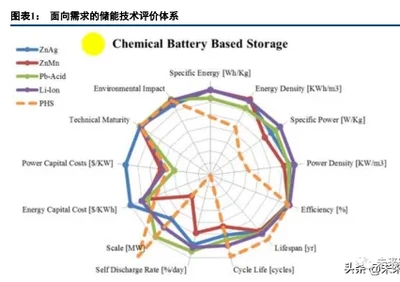 Deep Report on Lithium Battery Industry: A Collection of Battery Technology ProspectsJanuary 13, 2026Energy storage technology is fundamentally a technology that caters to demand, and its evaluation indicator system encompasses energy indicators, power indicators, scale indicators, lifespan indicators, ...view
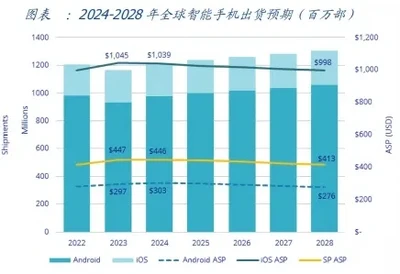 Analysis and Demand Forecast of Consumer Lithium Battery Market in 2024!March 31, 2026Part 1: Steady Growth in Traditional Consumer Electronics1.1 Smartphones: The global shipment growth rate is expected to be 4% in 2024. According to IDC, the global smartphone shipment growth rate is ...view
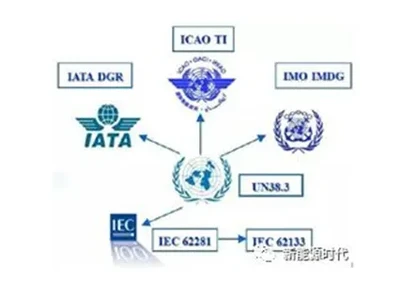 Introduction to Lithium-ion Battery Standards (International Edition)March 31, 2026I. UN38.3UN38.3 is the section of Chapter 38, Paragraph 3 of the United Nations' "Manual of Tests and Criteria for the Transport of Dangerous Goods." In 2003, the United Nations adopted ...view
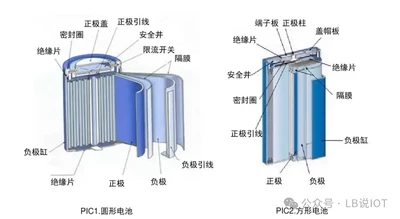 Safety First: A Multidimensional Strategy Analysis for Enhancing Lithium-ion Battery SafetyMarch 31, 2026Application and Safety Issues of Lithium-ion Batteries: Lithium-ion batteries are widely used due to their high energy density, high output power, and high average output voltage. However, accidents ...view
 Golf Cart Battery Pack Upgrades (2026): How Lithium Helps Resorts and Courses Go Greener — And Look Better Doing ItJune 16, 2026For modern resorts and golf courses, sustainability is no longer a nice-to-have. Environmental compliance pressure is rising across hospitality and leisure sectors, and brand reputation increasingly d...view
 EN
EN