In the deployment of energy storage power station projects, centralized storage and string-level storage are the two major mainstream technical architectures in the current market. Many project developers and engineering practitioners face the same challenge: What is the actual difference between the two architectures? Which has lower cost, better returns, and easier O&M? This article uses plain language to comprehensively analyze both from five core dimensions: fundamental principles, cost, reliability, O&M, and flexibility, helping you precisely match the optimal solution for your project.
All battery clusters are parallel-connected on the DC side, uniformly connected to a single high-power PCS device. The entire station's batteries complete AC/DC conversion, grid connection, and charge/discharge scheduling as one — a 'share honor, share loss' overall operating mode.
Adopting a 'one cluster, one string' modular design, each battery cluster is matched with a dedicated small-power PCS. Each battery cluster independently completes charging/discharging and independent management, finally merging and connecting to the grid on the AC side. A single string fault does not affect the overall system operation.
Plain analogy: Centralized storage is like a train—one faulty component and the entire train stops. String-level storage is like multiple independent cars—one breaks down and the others continue normally without interference.
Aspect | Centralized Storage | String-Level Storage |
Initial Construction Cost | Lower: Single high-power PCS unit cost is lower; fewer accessories, simpler wiring, and lower infrastructure costs. | Higher: More PCS units, greater procurement and commissioning workload; slightly higher upfront investment. |
Full-Lifecycle Cost | Higher long-term: High dependency on battery consistency; single-cluster degradation drags down overall system efficiency, accelerating battery aging and raising replacement costs. | Lower long-term: Independent per-cluster management eliminates the 'barrel effect'; battery degradation is uniform, cycle life longer, and system efficiency stable, reducing long-term O&M and replacement costs. |
Selection conclusion: Choose centralized for tight short-term budgets and fixed-scale projects. Choose string-level for projects focused on long-term stable returns and long-term operation.
Centralized storage: All battery clusters are strongly coupled; prone to circulating current issues. A single cluster cell degradation or fault directly pulls down the entire system's output power. System fault tolerance is extremely low — a single point of failure affects the entire station.
String-level storage: String-level independent operation and fault isolation. When a single string faults, it automatically goes offline, completely without affecting other strings' normal charge/discharge. Compared to centralized, effective available capacity increases by 5%-10%, with independent thermal management systems greatly reducing battery thermal runaway risk. Higher operational safety and stability.
Selection conclusion: Projects with high requirements for station stability and continuity, and those that must prevent single-point fault shutdowns, should prioritize string-level.
Centralized: Fault diagnosis is difficult; no precise location function. Requires step-by-step manual inspection, time-consuming. Most maintenance requires shutting down the entire machine, directly causing lost generation revenue. O&M costs increase year by year.
String-level: Supports cluster-level precise fault location, real-time monitoring of each battery cluster and PCS operating data. Routine maintenance and fault replacement do not require shutting down the entire machine — live work and non-stop O&M are possible, greatly reducing labor costs and shutdown losses. O&M efficiency doubles.
Selection conclusion: Projects with limited O&M staff that want to reduce O&M pressure and minimize shutdown losses should prioritize string-level storage.
Centralized: Equipment is highly integrated and layout is tidy, but expandability is extremely poor. Does not support phased construction or post-expansion. Only suitable for large projects with flat sites, fixed scale, and no post-retrofitting required.
String-level: Modular 'building-block' design supports phased construction and on-demand expansion. Equipment can be added later based on power consumption and grid connection needs. Individual cabinet units are small, lightweight, easy to transport and install, perfectly adapting to irregular and complex terrain such as mountains, rooftops, and distributed PV.
Selection conclusion: Complex terrain, future expansion plans, distributed PV with storage, and microgrid projects must choose string-level.
10MW+ large new energy base storage and grid-side shared energy storage stations.
Large energy storage projects with flat, open sites, limited budget, and one-time fixed project scale.
Grid-connected stations requiring large-power centralized scheduling and unified frequency/peak regulation.
Industrial and commercial peak-valley arbitrage, photovoltaic-storage-charging integration, and user-side backup power projects.
Distributed PV storage, mountain/rooftop complex terrain storage, and off-grid microgrid projects.
Projects pursuing long-term stable returns, wanting to reduce O&M risks, and with phased expansion needs.
Comparison Dimension | Centralized Storage | String-Level Storage |
Initial Construction Cost | Low | Relatively high |
Full-Lifecycle Revenue | Average | High |
Operational Reliability | Average, low fault tolerance | High, strong anti-risk |
O&M Difficulty | High, large shutdown losses | Low, efficient and easy |
Scenario Flexibility | Poor, cannot expand | Strong, expands on demand |
Core Applicable Scenarios | Large centralized stations, grid-side storage | Industrial/commercial, distributed, complex terrain storage |
Focus on initial cost, large-scale mandatory grid-connected projects -> Choose centralized storage.
Focus on long-term revenue, distributed complex scenarios -> Choose string-level storage.
Currently, the energy storage industry shows a clear divergence: String-level storage, with its core advantages of high reliability, high flexibility, low O&M, and long cycle life, continues to surge in penetration within industrial/commercial and distributed storage. Centralized storage, relying on extreme initial cost advantages, continues to monopolize the large new energy base and grid-side shared energy storage markets.
Energy storage selection requires no blind following. Only by comprehensively judging your project scale, site conditions, budget planning, and long-term operational needs can you select the highest cost-performance and most stable profit-optimal solution.
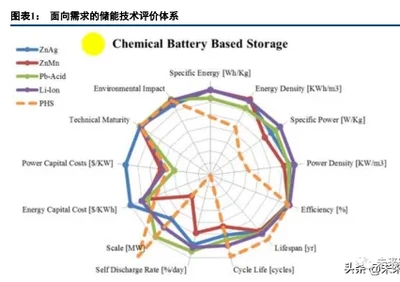 Deep Report on Lithium Battery Industry: A Collection of Battery Technology ProspectsJanuary 13, 2026Energy storage technology is fundamentally a technology that caters to demand, and its evaluation indicator system encompasses energy indicators, power indicators, scale indicators, lifespan indicators, ...view
 BMS Battery Management System for Industrial & Commercial Energy Storage Two-Level Distributed Architecture: BMU + BCUJuly 22, 2026Core Positioning: Industrial and commercial energy storage BMS adopts a BMU + BCU two-level distributed architecture, achieving 'bottom-layer precise acquisition + upper-layer intelligent decision...view
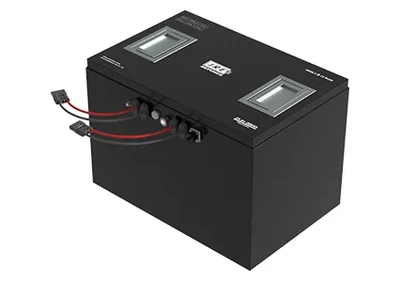 Basic knowledge of lithium batteries......March 31, 2026Introduction to Lithium MetalLithium is a metallic element that sits at the top of the metal category in the periodic table. Its chemical symbol is Li, and it is a silvery-white, very soft metal with ...view
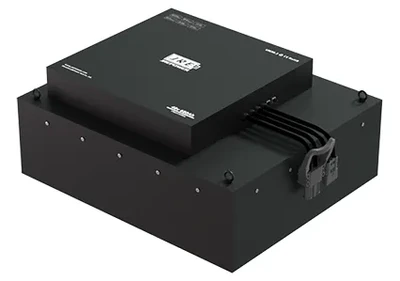 Uniformity of Lithium Battery Coating and Its Impact on Lithium BatteriesMarch 31, 2026Abstract: This paper delves into the issues of uniformity in lithium battery coating, its impact on battery performance, and the corresponding solutions. By analyzing each step in the coating process,...view
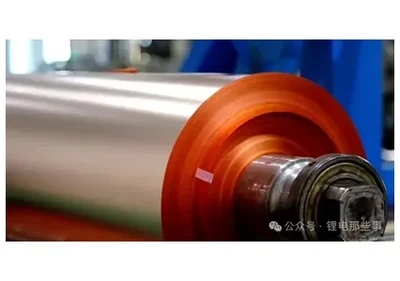 How are lithium battery cells designed? Which chemical system should be chosen?March 31, 2026What is cell design?Cell design refers to a method of assembling positive electrode material, negative electrode material, electrolyte, separator, and current collectors in certain proportions and pro...view
 Electric Forklift Battery Safety in the Warehouse: Why Smart BMS is Now a Must-HaveJune 16, 2026Warehouse operators are under increasing pressure to improve safety, uptime, and compliance — particularly in regulated environments like food processing, pharmaceutical logistics, and cold storage. ...view
 EN
EN