This paper delves into the issues of uniformity in lithium battery coating, its impact on battery performance, and the corresponding solutions. By analyzing each step in the coating process, the aim is to provide a reference for improving the quality and performance stability of lithium battery production.
In the production process of lithium batteries, the coating process is one of the crucial steps. The uniformity of the coating directly affects the performance and quality of lithium batteries. Therefore, an in-depth study of lithium battery coating uniformity and its impact on battery performance is of significant practical importance.
1. Thickness variations on the electrode surface with uneven distribution of active materials. During the actual coating process, various factors can lead to different levels of thickness variations on the electrode surface. This is caused by insufficient precision of the coating equipment, improper control of process parameters, or issues with the quality of raw materials. An uneven distribution of active materials can result in inconsistent electrochemical performance within the battery, thereby affecting the overall performance of the battery.
2. Local areas with excessively thick or thin coating. An excessively thick coating can reduce the energy density of the battery and increase internal resistance, affecting the battery's charge and discharge performance. An excessively thin coating can lead to insufficient battery capacity and may even cause short circuits and other safety issues.
1. Inconsistent battery capacity affecting the stability of overall performance. Due to uneven coating, different areas have varying amounts of active material, resulting in inconsistent battery capacity. During use, areas with smaller capacity will reach charge and discharge limits before areas with larger capacity, affecting the stability of the battery's overall performance.
2. Reduced energy density of the battery, limiting its energy storage capacity. Uneven coating leads to lower space utilization within the battery, thereby reducing its energy density. Additionally, areas with excessive thickness can increase the weight of the battery, further reducing its energy density.
3. Shortened battery cycle life, reducing its reliability. Uneven coating can cause inconsistent electrochemical performance within the battery, resulting in local overcharging or over-discharging during charge and discharge processes. This accelerates battery aging, shortens the cycle life, and reduces its reliability.
1. Optimize the coating substrate
Choose a substrate with high surface flatness, uniform thickness, and material properties suitable for the application. The surface flatness and thickness uniformity of the substrate directly affect the quality of the coating. Therefore, when selecting the substrate, one should choose materials with high surface flatness and uniform thickness. Additionally, the material properties should be chosen based on the performance requirements of the battery and the characteristics of the coating process.
2. Control the properties of the adhesive
Precisely adjust the working viscosity of the adhesive to enhance its affinity for the substrate surface, ensuring the uniformity and stability of the coating. The working viscosity of the adhesive has a significant impact on the uniformity and stability of the coating. If the working viscosity of the adhesive is too high, it can lead to uneven coating; if it is too low, it can affect the bonding strength of the adhesive, thereby affecting the performance of the battery. Therefore, the working viscosity of the adhesive should be precisely adjusted to ensure both the uniformity and stability of the coating and to meet the performance requirements of the battery.
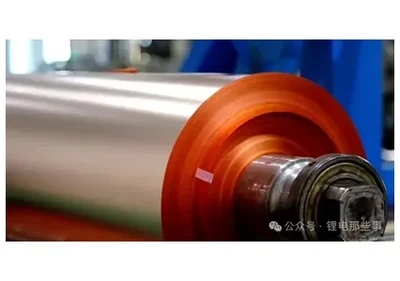
3. Precision machining of the coating roller
Strictly control the form and position tolerances of the coating roller, increase rigidity, ensure the quality of dynamic and static balance, optimize surface quality, and ensure temperature uniformity, thereby reducing deviations during the coating process. The form and position tolerances, rigidity, dynamic and static balance quality, surface quality, and temperature uniformity of the coating roller all affect the quality of the coating. Therefore, these parameters of the coating roller should be strictly controlled to meet the requirements of the coating process.
4. Precise control of the coating machine
Design a coating machine with a stable operating speed to improve overall stability, enhance the precision and sensitivity of the pressure mechanism between the steel roller and the rubber roller, and achieve precise coating. The stability of the operating speed, the precision, and sensitivity of the pressure mechanism between the steel roller and the rubber roller of the coating machine all affect the quality of the coating. Therefore, a coating machine with a stable operating speed should be designed to improve overall stability and enhance the precision and sensitivity of the pressure mechanism between the steel roller and the rubber roller, achieving precise coating.
5. Optimization of process parameters
By precisely controlling the coating speed, thickness, and temperature, achieve uniform material distribution and consistent thickness, ensuring coating quality. The optimization of process parameters is key to improving coating uniformity. Precise control of coating speed, thickness, and temperature should be achieved to ensure uniform material distribution and consistent thickness, ensuring coating quality.
6. Introduction of automated operations
Introduce advanced automatic control systems to achieve precise setting and real-time adjustment of process parameters, reducing the interference of human factors and improving the consistency and stability of the product. Automated operations can reduce the interference of human factors and improve the consistency and stability of the product. Therefore, advanced automatic control systems should be introduced to achieve precise setting and real-time adjustment of process parameters.
The uniformity of lithium battery coating has a significant impact on the performance and quality of lithium batteries. By optimizing the coating substrate, controlling the properties of the adhesive, precision processing of the coating rollers, accurately controlling the coating machine, optimizing process parameters, and introducing automated operations, the uniformity of lithium battery coating can be effectively improved, thereby enhancing the performance and quality stability of lithium batteries.
From the Lithium Battery Knowledge & Technology Platform
https://mp.weixin.qq.com/s/ZSIEprto-vaV8IBucTwTcQ
 Understanding Grid-Forming Energy Storage: The Ultimate Stabilizer for New Energy Power GridsJuly 22, 2026In the new energy era, the power grid lacks a 'critical short board.' Wind and PV power stations are now everywhere, gradually replacing traditional thermal and hydropower, helping the power i...view
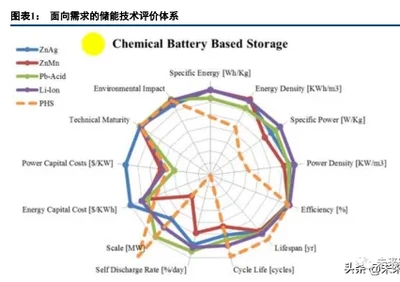 Deep Report on Lithium Battery Industry: A Collection of Battery Technology ProspectsJanuary 13, 2026Energy storage technology is fundamentally a technology that caters to demand, and its evaluation indicator system encompasses energy indicators, power indicators, scale indicators, lifespan indicators, ...view
 How are lithium battery cells designed? Which chemical system should be chosen?March 31, 2026What is cell design?Cell design refers to a method of assembling positive electrode material, negative electrode material, electrolyte, separator, and current collectors in certain proportions and pro...view
 Basic knowledge of lithium batteries......March 31, 2026Introduction to Lithium MetalLithium is a metallic element that sits at the top of the metal category in the periodic table. Its chemical symbol is Li, and it is a silvery-white, very soft metal with ...viewBMS Common Fault Handling Guide Battery Management System Troubleshooting ManualJuly 22, 2026This guide summarizes high-frequency faults in daily BMS battery management system O&M, organized into four categories: Master Control & Communication, Insulation & Current Detection, Temp...view
 Classification and Characteristics of Lithium BatteriesMarch 31, 2026Lithium-ion batteries are characterized by their high energy density, lightweight design, lack of memory effect, and environmental friendliness. They are widely used in electric vehicles, energy stora...view
 EN
EN
 ru
ru