Core Positioning: Industrial and commercial energy storage BMS adopts a BMU + BCU two-level distributed architecture, achieving 'bottom-layer precise acquisition + upper-layer intelligent decision-making' separated coordination. It is the core control center ensuring safe operation, lifespan guarantee, and maximum performance for energy storage systems.
Architecture: Consists of BMU (Battery Management Unit) + BCU (Battery Control Unit), with clear hierarchy and well-defined division of labor.
BMU (Execution Layer): The 'nerve endings' of the system, directly facing cells, responsible for bottom-layer data acquisition and balance execution.
BCU (Control Layer): The 'spinal cord center' of the system, aggregating data, running algorithms, executing logic, and managing external interfaces.
Communication: BMU <-> BCU via CAN bus — real-time, stable, and strongly anti-interference, adapting to the harsh conditions of industrial and commercial energy storage.
Directly connected to cells/battery modules, it is the source of all data, has no computing pressure, and focuses on acquisition and execution.
Cell Voltage Acquisition: Real-time monitoring of each cell's voltage, accuracy <= +/-5mV, providing the basis for balancing and protection.
Multi-Point Temperature Acquisition: Acquires cell surface, terminal, busbar, and module ambient temperatures, covering key thermal risk points.
Auxiliary Acquisition: Module total voltage, balance status feedback.
Goal: Eliminate cell voltage differential, improve whole-pack capacity utilization, and delay battery degradation.
Passive Balancing: Resistive energy dissipation type. Low cost, simple structure, suitable for small and medium capacity energy storage.
Active Balancing: Energy transfer type. High efficiency, no heat generation, suitable for large-capacity/high-requirement industrial and commercial scenarios.
The core brain of the system, aggregating all system data, running algorithms, executing protection, and interfacing with external devices.
Basic Electrical Sampling: Cell voltage/temperature, battery cluster total voltage, charge/discharge current, insulation resistance.
High-Voltage Safety Sampling: Insulation monitoring — real-time calculation of system ground insulation value, warning of leakage risk. HVIL (High-Voltage Interlock) — monitors high-voltage connector locking status, preventing loosening, arcing, and electric shock risks.
Based on acquired data, precisely evaluates the battery's true state through model algorithms:
SOC (State of Charge): Remaining energy estimation — ampere-hour integration + OCV calibration, accuracy <= +/-3%.
SOH (State of Health): Battery lifespan/capacity degradation evaluation.
SOP (State of Power): Maximum charge/discharge power available at current moment.
SOE (State of Energy): Estimatable total releasable energy.
Thermal State Estimation: Cell internal temperature extrapolation (higher than surface temperature).
Safety Warning: Micro-short circuit, leakage current, and thermal runaway precursor monitoring.
Balance Management: Based on voltage differential thresholds, issues commands to control BMU to start/stop balancing, maintaining cell consistency.
Thermal Management: Based on temperature data, automatically controls fans, liquid cooling pumps, and heaters to maintain the battery within the optimal range of 25C to 35C.
Charge/Discharge and Safety Management:
Multi-level protection: over-voltage, under-voltage, over-current, over-temperature, and low-temperature.
On anomaly: immediate alarm -> limit power -> cut high-voltage contactor.
Interfaces with PCS (Power Conversion System) and EMS (Energy Management System): reports allowed charge/discharge power, controls high-voltage on/off sequences, and executes dispatch commands.
Precise Acquisition: BMU acquires data nearby, avoiding long-distance transmission errors.
Reliable Control: BCU makes centralized decisions, with unified logic and timely protection.
High Expandability: Flexibly expands module/cluster count, adapting to various capacity scenarios in industrial and commercial applications.
Safety Redundancy: Two-level separation means single-point faults do not affect the whole, improving system stability.
This two-level architecture is the standard mainstream solution for safe, efficient, and long-life operation of industrial and commercial energy storage.
 Wow! The main power storage battery for the Shenzhou-19 manned spacecraft is a lithium battery!March 31, 2026Introduction:Starting with Shenzhou-18, the main power storage batteries of the Shenzhou spacecraft have been upgraded to more advanced lithium-ion batteries, with each battery pack's capacity inc...view
 Transformer-Free Grid Connection! Explaining High-Voltage Cascaded Energy Storage Technology: Principles and Advantages at a GlanceJuly 22, 2026In the new energy era, the power grid lacks a 'critical short board.' Wind and PV power stations are now everywhere, gradually replacing traditional thermal and hydropower, helping the power i...view
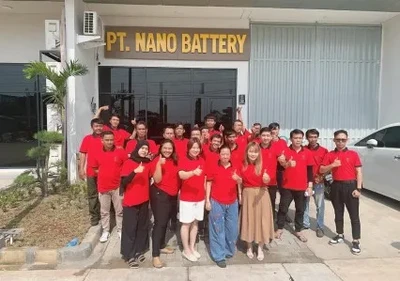 Celebrating 2 Years: JREPower Indonesia Production Base AnniversaryJanuary 13, 2026Today, JREPower (Shenzhen JREPower Tech Co., Ltd.) grandly celebrated the 2nd anniversary of its production base establishment in Jakarta, Indonesia. The milestone event gathered local government...view
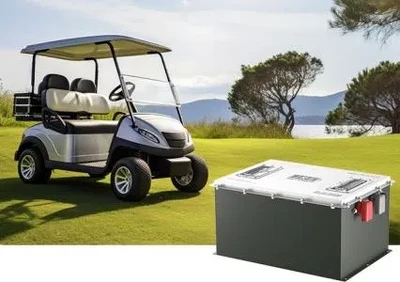 Golf Cart Battery Selection Guide: Performance, Choices, and Core PowerFebruary 3, 2026Is your golf cart becoming increasingly sluggish? Tired of frequently changing batteries? The right battery changes everything. It is the heart of your cart's reliability.Golf cart batteries are r...view
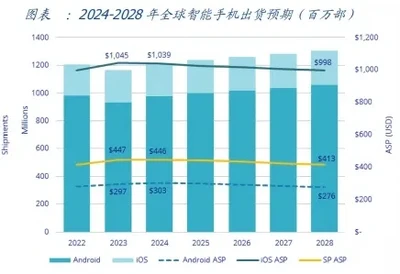 Analysis and Demand Forecast of Consumer Lithium Battery Market in 2024!March 31, 2026Part 1: Steady Growth in Traditional Consumer Electronics1.1 Smartphones: The global shipment growth rate is expected to be 4% in 2024. According to IDC, the global smartphone shipment growth rate is ...view
 Ultimate Energy Storage Selection Guide: Centralized vs. String-Level — Master the Differences and Choose the Right SolutionJuly 22, 2026In the deployment of energy storage power station projects, centralized storage and string-level storage are the two major mainstream technical architectures in the current market. Many project develo...view
 EN
EN