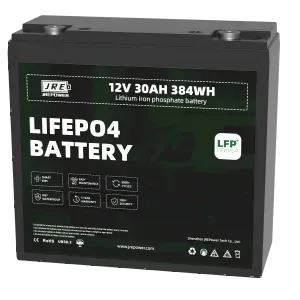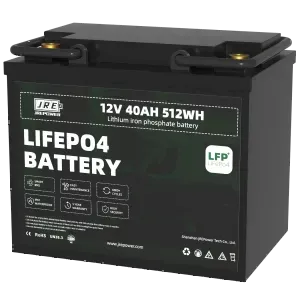
Is your golf cart becoming increasingly sluggish? Tired of frequently changing batteries? The right battery changes everything. It is the heart of your cart's reliability.
Golf cart batteries are rechargeable energy storage units that power the motor. For modern carts, lithium iron phosphate (LiFePO4) batteries stand out — they last longer, charge faster, and deliver more consistent power than traditional batteries. Choosing a battery isn't just about picking a type. You need to understand the fundamentals. Let's break down the key issues every cart owner should know.
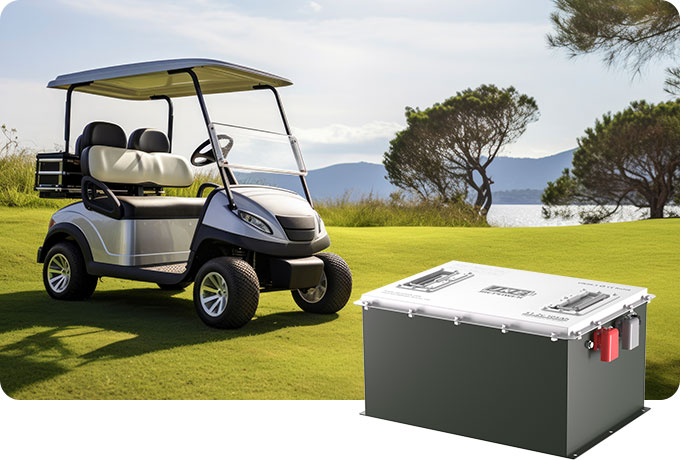
You rely on your cart every round. But what really powers it? Understanding this core component is the first step toward enhanced performance. A golf cart battery is a deep-cycle battery designed for sustained energy output. Modern solutions like lithium iron phosphate deliver more power and longer life. JREPower focuses on safe, durable, and reliable technology in designing these batteries. Golf cart batteries provide stable, deep-cycle power. They are built to be charged and discharged repeatedly. But not all batteries are created equal. Here's a breakdown:
Core Function: It converts stored chemical energy into electricity. This powers the vehicle's movement and various accessories.
Key Components:
Battery Cells: The units that store energy. JREPower uses high-quality, stable LiFePO4 cells.
Battery Management System (BMS): The “brain” of the battery. A smart BMS protects the battery.
Housing & Connectors: The physical structure that ensures durability and reliable connections.
3. Battery Type Comparison:
| Battery Type | Advantages | Disadvantages |
|---|---|---|
| Lead-Acid Battery | Low initial cost. | Heavy, short lifespan, slow charging. |
| LiFePO4 Battery | Long lifespan, fast charging, maintenance-free. | Higher initial cost. |
Switching to LiFePO4 is a major upgrade. It transforms your battery from a consumable to a long-term asset. JREPower batteries are designed for exactly this role — emphasizing durability and smart management — supporting our goal to be your reliable energy partner.
Have you ever brought home a new battery, plugged it in, and… nothing? Here's a crucial fact: a battery on its own is not a complete system. Yes, every rechargeable golf cart battery needs a compatible charger. The charger is essential for safely replenishing energy. Using the correct charger that matches your battery chemistry is vital for safety and battery life. Think of the charger as a dedicated energy fueling system. Using the wrong one can be ineffective or even harmful.
Charger's Role: It converts AC power into the precise DC power your battery needs.
Chemistry Matters: Different battery types require different chargers.
Lead-Acid Chargers: Require long, multi-stage charging cycles.
LiFePO4 Chargers: Use faster, more precise charging methods. Using an incompatible charger can cause damage.
3. Intelligent Benefits: Modern chargers are smart. They communicate with the Battery Management System (BMS), adjust charging based on conditions, and stop automatically when full. At JREPower, we design for system coordination. Our batteries feature integrated intelligent BMS technology. This system works in harmony with the charger to deliver optimal performance. This attention to the entire energy ecosystem reflects our commitment to providing powerful, simple, worry-free energy solutions.
You often hear about lithium batteries. Is it just a trend — or a true game-changer? For the everyday needs of golf carts, the answer is clear. Yes, lithium batteries are highly suitable for golf carts. Specifically, LiFePO4 batteries offer significant advantages: much longer life, rapid charging, zero maintenance, and consistent power delivery from full charge to empty. For the demands of golf carts, a high-quality LiFePO4 battery is a critical upgrade. It addresses common pain points.
1. Solving Golfer Problems:
Say Goodbye to “Range Anxiety”: LiFePO4 batteries maintain strong power delivery right up until depletion. Your cart performs just as well on hole 18 as on hole 1.
Maintenance-Free: No more checking fluid levels or cleaning corrosion. LiFePO4 batteries are sealed and completely maintenance-free.
Fast Turnaround: Charging takes only 2–4 hours instead of 8–12. This is crucial for busy courses or continuous use by individual owners.
2. Business Value Considerations: For golf courses, carts are critical assets and revenue generators.
Extended Lifespan: A LiFePO4 battery can last 5–8 years.
Reduced Labor: Maintenance-free design frees up staff time.
High Reliability: Fewer cart breakdowns mean happier guests and members.
3. Safety & Design: Safety is the top priority. The chemistry of LiFePO4 is inherently stable. JREPower's product design reflects our core value of integrity. We never compromise on safety. Delivering reliable, safe products is our promise — and it makes LiFePO4 the responsible choice.
You've invested in a premium battery. So how do you protect that investment? Smart charging practices are key to maximizing both performance and lifespan.
Guided by an advanced Battery Management System (BMS), smart charging actively protects and optimizes your battery. It prevents overcharging, manages temperature, and balances the cells. Compared to basic charging methods, this careful treatment significantly extends battery life.
Think of smart charging as expert-level care for your battery. It's not just about plugging in — it's about how the energy is delivered. A basic charger simply pushes power until a voltage limit is reached. A smart system manages the entire process intelligently.
The BMS is your battery's guardian. In JREPower systems, it does more than monitor — it actively manages.
Precision Charging: It communicates with the charger to follow the ideal LiFePO4 charging curve (constant current followed by constant voltage), ensuring fast yet gentle charging.
Cell Balancing: It ensures each individual cell within the pack charges to the same level. This prevents weak cells from dragging down the whole pack — a common cause of premature battery failure.
Temperature Management: If the battery is too hot or too cold, it adjusts charging power to protect internal chemistry.
This technology translates into practical advantages that protect your purchasing decision.
Consistent, Stable Performance: A balanced battery pack consistently delivers full power and range, round after round.
Avoid Premature Wear: By preventing overvoltage, undervoltage, and thermal stress, the BMS helps your battery reach its full cycle life — often thousands of charge cycles.
Peace of Mind: You can safely charge overnight. The system stops when full and maintains the battery in a healthy state.
This intelligent approach is central to JREPower's product philosophy. We integrate robust BMS technology because we see batteries as long-term assets. By prioritizing longevity and reliability, our solutions are designed to deliver lower total cost of ownership and continuous, uninterrupted performance — reflecting our commitment to being your true energy partner.
Choosing the right battery can completely transform your golf cart experience. A modern LiFePO4 system delivers reliable power, long-term value, and ease of use.
Alex Chen is a senior energy solutions engineer with over a decade of experience in the power battery industry. He has worked with golf course facilities and vehicle manufacturers across North America and Asia. Currently, Alex focuses on creating content for JREPower, sharing expert insights to help customers make informed energy decisions.
 Powering the Future: The Rise of Li-ion Battery TechnologyJanuary 21, 2026IntroductionIn today’s electrified world, the Li-ion battery has become the driving force behind modern innovation. From electric vehicles and renewable energy storage to industrial automation and te...view
 Transformer-Free Grid Connection! Explaining High-Voltage Cascaded Energy Storage Technology: Principles and Advantages at a GlanceJuly 22, 2026In the new energy era, the power grid lacks a 'critical short board.' Wind and PV power stations are now everywhere, gradually replacing traditional thermal and hydropower, helping the power i...viewUltimate Analysis of Energy Storage Selection: Centralized vs. String-Level BESS Beyond Wiring Differences — The Core is Control Granularity CompetitionJuly 22, 2026In energy storage project design and equipment selection, centralized and string-level BESS (Battery Energy Storage Systems) are the two dominant technical routes. Many practitioners have long held a ...view
 Low & High Voltage Ride-Through: Why They Are Essential Stabilization Requirements for New Energy EquipmentJuly 22, 2026As large-scale PV and wind power connect to the grid, new energy sources are gradually replacing traditional generation, becoming the primary power supply unit of the power system. The grid is like a ...viewStandardized Operation Procedures for Full-Process Photovoltaic Power Station O&MJuly 22, 2026Chapter 1 General Provisions (O&M Objectives, Scope of Application, Core Principles)1.1 O&M Objectives and SignificanceIn order to unify the full-process operation standards for daily inspec...view
 Air-Cooled vs. Liquid-Cooled Storage: Industrial & Commercial Energy Storage Thermal Management ComparisonJuly 22, 2026In energy storage system design, thermal management is the core factor determining battery performance, service life, and operational safety. As cells evolve toward larger capacity and higher energy d...view
 EN
EN
 ru
ru