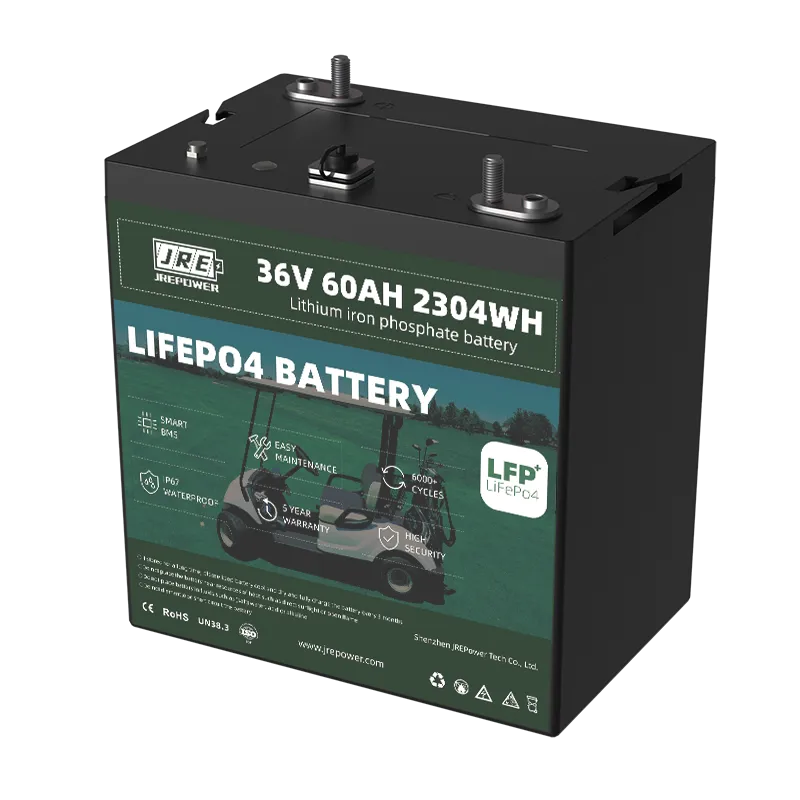
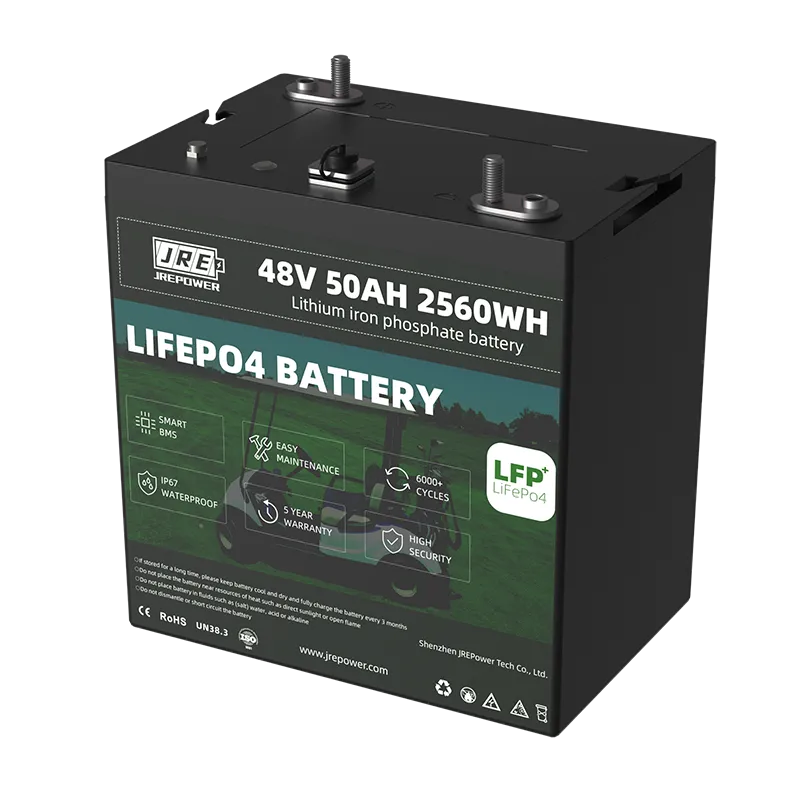
Buying an RV battery for personal use is relatively straightforward: the owner knows the vehicle, expected travel pattern and available battery compartment. Sourcing batteries for an RV production line, dealership network or wholesale program is different. The battery has to work across repeated installations, predictable electrical loads and a supply chain that may continue for years.
That changes the purchasing question from “Which lithium battery has the most capacity?” to “Which battery specification can we use reliably across our application?” Voltage, usable energy, BMS protection, charger compatibility, dimensions and production consistency all become part of the decision.

Most house-battery selection starts with system voltage. JREPower's current RV battery range includes 12V LiFePO4 configurations at 50Ah, 100Ah and 200Ah. Capacity can then be selected according to the expected electrical load and the amount of off-grid runtime required.
A refrigerator, lighting and small electronics create a very different energy profile from an RV equipped with a large inverter and multiple high-power appliances. For this reason, an OEM evaluating a lithium battery pack for rv applications should calculate expected daily consumption rather than specifying capacity from a competitor's vehicle or an older lead-acid design.
Capacity tells you how much energy is stored. The BMS and cell configuration determine how much current the battery can safely deliver at a given moment. Both numbers matter.
An RV may have enough stored energy for a full day of use but still experience problems if a large inverter demands more current than the battery system is designed to supply. OEM engineering teams should therefore provide continuous and peak current requirements when discussing a battery specification with a supplier.
The same applies when selecting a 12 volt lithium deep cycle rv battery. The nominal voltage and amp-hour rating alone do not describe the complete electrical capability of the pack.
RVs do not operate in controlled indoor environments. A battery compartment can experience cold mornings, hot summer travel and long storage periods between trips. The battery system should therefore account for temperature as part of normal operation rather than treating it as an unusual condition.
JREPower's RV range uses LiFePO4 chemistry and an intelligent BMS with temperature-related protection. Its product information also highlights low self-discharge and maintenance-free operation, both useful characteristics for recreational vehicles that can remain parked for extended periods.
The RV Industry Association has also addressed the growing use of lithium batteries in RVs through its industry standards work, including provisions concerning listed lithium battery products. For OEMs selling into regulated markets, applicable vehicle and electrical standards should be reviewed during system design rather than after the battery has already been selected.
Changing battery chemistry without reviewing the rest of the electrical system is a common sourcing mistake. The converter or charger needs an appropriate charging profile, while the inverter and DC distribution system must be compatible with the chosen battery configuration.
This becomes particularly important for wholesale programs because the same battery may be sold into several RV models. A good lithium rv battery supplier should request application information before recommending one standard pack for every vehicle.
Unit price is easy to compare; production consistency is harder to see. OEM and wholesale buyers should evaluate cell consistency, BMS configuration, enclosure construction, connector specifications, documentation and how engineering changes are controlled between production batches.
Physical dimensions also matter. A change of only a few millimeters can create problems in a tightly designed battery compartment, while a connector change can disrupt an assembly process or aftermarket installation kit.
For imported lithium batteries, buyers should additionally request the documentation needed for transportation. IATA publishes current lithium battery shipping guidance, while the UN Manual of Tests and Criteria contains the Section 38.3 testing framework widely used for transport qualification.
An effective RFQ should identify the RV type, nominal system voltage, target capacity, inverter rating, maximum load, charger specifications, installation dimensions, operating temperatures, connector requirements and expected order volume.
This gives the battery supplier enough information to evaluate compatibility before samples are produced. It also makes quotations easier to compare because suppliers are responding to the same application requirements rather than interpreting a simple capacity request differently.
For OEMs, distributors and fleet operators, that application-driven sourcing process is more valuable than chasing the highest amp-hour rating or lowest initial price. The objective is a battery platform that can be integrated, supplied and supported consistently over the life of the RV program.
The required size depends on daily energy consumption, inverter loads, charging sources and desired off-grid runtime. Common 12V configurations include 50Ah, 100Ah and 200Ah.
Yes in many systems, but the charger, converter, inverter, wiring and battery-management requirements should be checked before conversion.
A properly designed lithium battery pack normally uses a BMS to monitor voltage, current and temperature and to provide protection under abnormal operating conditions.
Provide voltage, capacity target, inverter power, maximum current, battery-compartment dimensions, charger details, connectors, expected temperature range and purchasing volume.
Documentation depends on destination and shipping method, but buyers commonly need product specifications and applicable lithium battery transport test information such as UN 38.3 documentation.
RV Industry Association. (2020). RV Industry Making Changes to Address Growing Popularity of Lithium Batteries. RVIA.
International Air Transport Association. (2026). Battery Transport Guidance. IATA.
United Nations Economic Commission for Europe. (2023). Manual of Tests and Criteria, Revision 8. United Nations.
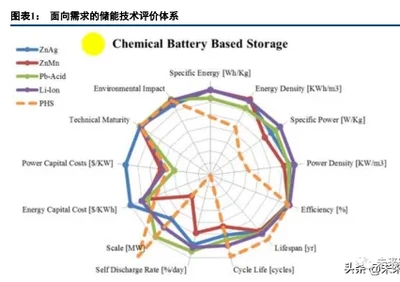 Deep Report on Lithium Battery Industry: A Collection of Battery Technology ProspectsJanuary 13, 2026Energy storage technology is fundamentally a technology that caters to demand, and its evaluation indicator system encompasses energy indicators, power indicators, scale indicators, lifespan indicators, ...view
 BMS Battery Management System for Industrial & Commercial Energy Storage Two-Level Distributed Architecture: BMU + BCUJuly 22, 2026Core Positioning: Industrial and commercial energy storage BMS adopts a BMU + BCU two-level distributed architecture, achieving 'bottom-layer precise acquisition + upper-layer intelligent decision...view
 Wow! The main power storage battery for the Shenzhou-19 manned spacecraft is a lithium battery!March 31, 2026Introduction:Starting with Shenzhou-18, the main power storage batteries of the Shenzhou spacecraft have been upgraded to more advanced lithium-ion batteries, with each battery pack's capacity inc...view
 BMS Common Fault Handling Guide Battery Management System Troubleshooting ManualJuly 22, 2026This guide summarizes high-frequency faults in daily BMS battery management system O&M, organized into four categories: Master Control & Communication, Insulation & Current Detection, Temp...view
 Celebrating 2 Years: JREPower Indonesia Production Base AnniversaryJanuary 13, 2026Today, JREPower (Shenzhen JREPower Tech Co., Ltd.) grandly celebrated the 2nd anniversary of its production base establishment in Jakarta, Indonesia. The milestone event gathered local government...view
 Uniformity of Lithium Battery Coating and Its Impact on Lithium BatteriesMarch 31, 2026Abstract: This paper delves into the issues of uniformity in lithium battery coating, its impact on battery performance, and the corresponding solutions. By analyzing each step in the coating process,...view
 EN
EN
 ru
ru