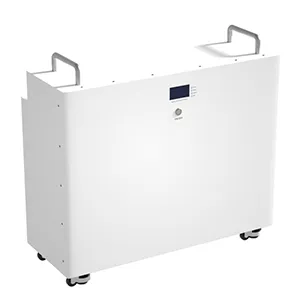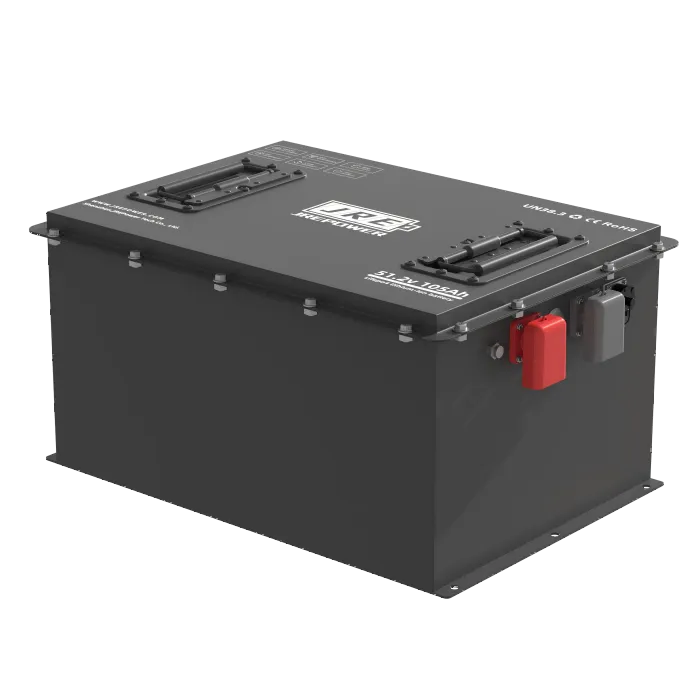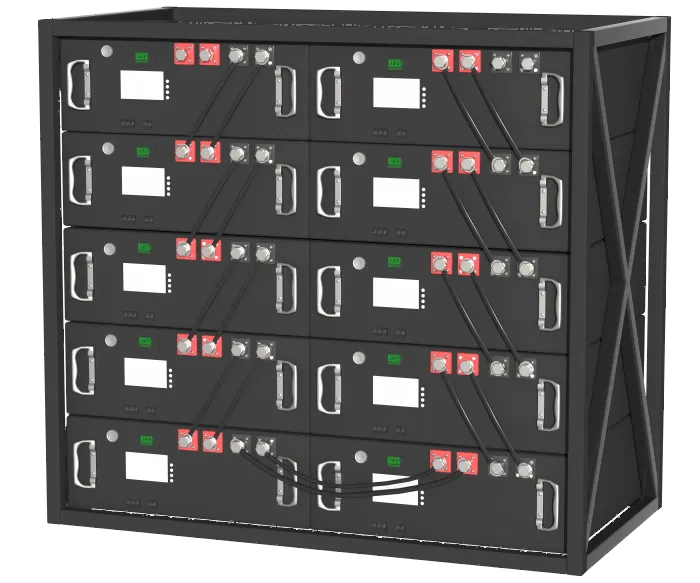
Why are lithium batteries so widely used, what are their advantages, and what are the main applications at present? The following content will sort out the concept definition, working principle, industry status, industrial chain, and other aspects of lithium batteries.
1.Introduction to Lithium Batteries
Lithium batteries, also known as lithium-ion batteries, are a type of secondary battery that relies on the movement of lithium ions (Li+) between the positive and negative electrodes to achieve charging and discharging purposes. Compared with other major secondary batteries, lithium batteries have obvious advantages such as high energy density, high discharge power, long cycle life, no memory effect, and environmental friendliness. The specific situations are as follows:
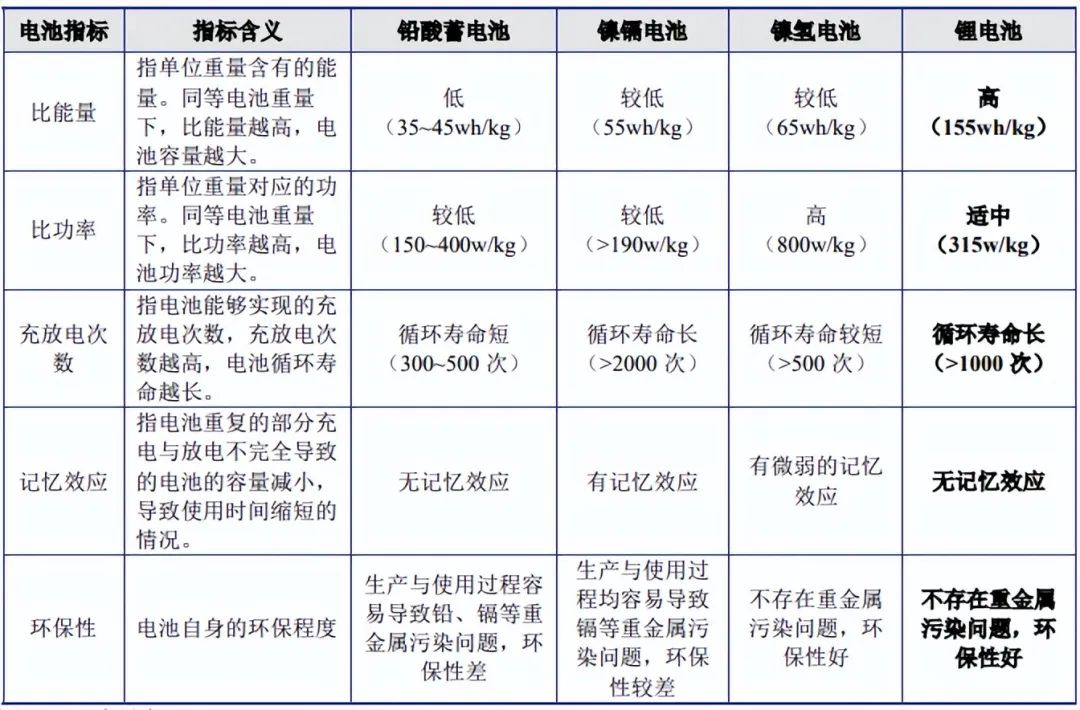
2.Working Principle of Lithium Battery Energy Storage
Lithium-ion batteries are currently the most technologically mature and rapidly developing electrochemical energy storage technology, undoubtedly the central technology route for the future development of new energy storage. The working principle of a lithium battery energy storage system is to utilize the migration of lithium ions between the positive and negative electrodes to achieve the process of charging and discharging, thereby storing and releasing electrical energy.
Specifically, the lithium battery energy storage system consists of multiple lithium-ion battery cells, each of which includes a positive electrode, a negative electrode, and an electrolyte. There is a separator between the positive and negative electrodes, but the electrolyte can pass through the separator to form an ionic channel.
When the lithium battery energy storage system needs to store electrical energy, an external power supply delivers electrical energy to the system through a charger, which is converted into chemical energy and stored between the positive and negative electrodes of the lithium-ion battery cells via the ionic channel. During this process, ions migrate from the positive electrode to the negative electrode, forming a chemical reaction.
When electrical energy is needed, the lithium battery energy storage system converts the stored electrical energy into direct current output, which is processed by devices such as inverters and then supplied to external loads. At this point, lithium ions migrate from the negative electrode to the positive electrode, releasing chemical energy and generating electrical energy output.
3.2023 Lithium Battery Performance Report
Lithium battery installation volume increased by 31.6% year-on-year: According to the China Automotive Power Battery Industry Innovation Alliance, from January to December 2023, China's cumulative battery installation volume reached 387.7 GWh, with a year-on-year increase of 31.6%.
Lithium battery prices dropped by over 50% compared to the previous year: The price of battery-grade lithium carbonate dropped from 520,000 yuan per ton at the end of 2022 to 100,000 yuan per ton at the end of 2023, a decrease of over 80%. The price of square iron phosphate power cell dropped from 0.99 yuan per Wh at the end of 2022 to 0.43 yuan per Wh at the end of 2023, a decrease of over 56%.
Lithium battery investment amount decreased by 46%: According to incomplete statistics from GGII, there were 137 new planned projects for China's lithium batteries and four major main materials in 2023, nearly half less than in 2022.
Lithium battery export value increased by nearly 40%: According to data from the General Administration of Customs, the export value of lithium batteries from January to November 2023 was 419.4 billion yuan, with a year-on-year increase of 39.5%. It is expected that the export growth rate for 2023 will be close to 40%.
According to terminal applications, the downstream of lithium batteries can be mainly divided into three major fields: power, consumer, and energy storage.
Power lithium batteries are mainly used in electric vehicles, electric light vehicles, electric tools, etc., and are the main application scenarios for lithium batteries at present (automotive power batteries are also known as "large-scale power batteries," while electric light vehicles/electric tools use power batteries are also known as "small-scale power batteries");
Consumer lithium batteries are mainly used in mobile phones, laptops, and recently emerging consumer electronics such as Bluetooth earphones and wearable devices, making them an important application field for lithium batteries;
Energy storage lithium batteries mainly support energy storage needs for communication base stations, peak shaving and valley filling at the user side, off-grid power stations, microgrids, rail transit, etc., and are an emerging field that has developed rapidly in recent years and is strongly supported by national policies.
Benefiting from the rapid development of the three major segments of power, consumer, and energy storage, the lithium battery industry will continue to maintain a trend of rapid growth. The development overview and future trends of each segment are as follows:
1. The market prospect for power lithium batteries is vast.
Power lithium batteries are currently the primary application market for lithium batteries, mainly used in new energy vehicles, electric light vehicles, and electric tools. On the policy front, against the macro backdrop of addressing climate change and promoting green development, new energy vehicles have become the widely recognized mainstream direction due to their clear advantages in energy efficiency, environmental friendliness, and intelligence.
In October 2020, China issued the "New Energy Vehicle Industry Development Plan (2021-2035)," strongly supporting the development of the new energy vehicle industry. It proposed that by 2025, new energy vehicle sales should account for about 20% of total vehicle sales, and by 2035, pure new energy vehicles should become the mainstream of new sales vehicles, with electric vehicles achieving comprehensive electrification in the public sector.
2. Consumer lithium batteries will grow steadily.
Consumer electronics mainly include smartphones, laptops, tablets, and smart hardware. With the rapid development of integrated circuits and Internet of Things technology, consumer electronic products are becoming increasingly powerful, and their applications are continuously expanding, gradually becoming indispensable necessities in people's daily lives, work, and entertainment.
With the rapid development of the consumer electronics industry, the output of consumer lithium batteries has grown rapidly. According to data from China Energy Storage Network, in 2021, China's production of consumer lithium batteries was 72GWh, achieving a year-on-year increase of 18%. In the future, as consumer electronic products become lighter and higher performance requirements continue to increase, new demands will be placed on the endurance and charging speed of consumer lithium batteries. GGII expects the demand for consumer lithium batteries to continue to maintain a growth trend, with annual growth rates remaining between 5%-10%.
3. The market potential for energy storage lithium batteries is enormous.
The energy storage lithium battery industry has enormous development potential, but due to technological, policy, and cost reasons, China's energy storage lithium battery market started relatively late. Currently, China's energy storage lithium batteries are mainly used in communication base stations, peak shaving and valley filling for users, off-grid power stations, microgrids, and rail transit, with some also exported to Southeast Asia, Europe, America, Australia, and other markets.
As a key support for achieving carbon peak and carbon neutrality in the energy sector, the new energy storage industry is a direction strongly supported by the state. In August 2021, the National Development and Reform Commission and the National Energy Administration jointly issued the "Guiding Opinions on Accelerating the Development of New Energy Storage," clearly stating that the main goal is to achieve a new energy storage installed capacity of over 30 million kilowatts by 2025. By 2030, the comprehensive market development of new energy storage will be realized.
Among these, the above opinions explicitly require promoting the continuous cost reduction and commercial-scale application of relatively mature new energy storage technologies such as lithium batteries. Therefore, with the implementation of related supporting policies, the lithium battery industry chain related to new energy storage will usher in significant market opportunities.
1.Upstream: The foundation of lithium battery development.
Raw material costs are high and supply is limited, making the need for localization and technological improvement urgent. The upstream of the lithium battery industry mainly consists of lithium mining-related resources and the main materials of the battery. At this stage, the supply of rare materials is still insufficient, and about 70% of the lithium in our country still needs to be imported. At the same time, the high demand for lithium batteries has led to a continuous rise in costs driven by the market, necessitating the acceleration of localization and lithium battery recycling to alleviate the high cost issues upstream. Therefore, the upstream of our country's lithium battery industry should focus on breakthroughs in supporting technologies and services for scarce resources. There is still a need for innovative breakthroughs in power battery materials to improve density, cycling, and safety to meet high-performance demands. The development characteristics of the four main materials upstream are different. Overall, the positive electrode and separator industries benefit from factors such as the shortage of upstream raw materials, high technical barriers, and a significant proportion of costs, resulting in a higher level of profitability. The development of the negative electrode and electrolyte in our country is not much different from the world level, with China's shipment volume ranking at the forefront, and the overall market pattern is relatively stable. The main materials upstream mainly determine the performance and safety issues of the battery. Currently, lithium iron phosphate and ternary batteries are the main ones, and there is still room for improvement in energy density, cycling, and temperature adaptability. Participants upstream and midstream still need to innovate and develop new materials to support high-performance manufacturing and application of batteries.
2.Midstream: High-performance manufacturing and assembly.
The midstream market is currently highly concentrated; companies are still in a state of low gross profit. In the future, market share needs to be increased through technological and cost control improvements. The main steps in the midstream of lithium batteries include sheet making, assembly, formation, and packaging. The essence of this link is the processing of materials and the attributes of high-performance assembly. Therefore, the core competitiveness of midstream companies lies in their ability to control materials, cost control, and the technological upgrading and iteration of battery manufacturing. Batteries are the main cause of spontaneous combustion in new energy vehicles, and technological upgrades provide higher safety.
3.Downstream: Demand-driven development.
The three major application segments of lithium batteries include power batteries, consumer batteries, and energy storage batteries. Before the popularization of power batteries, consumer batteries were the main demand side for lithium batteries. It has undergone a relatively complete industrial development cycle and is currently in a mature stage. Power batteries have grown rapidly in the past decade and currently dominate the shipment scale. Energy storage batteries are currently in the stage of improving technology and reducing costs. Thanks to the gradual advancement of clean energy substitution plans, it is expected that in the next 3-5 years, they will enter a stage of large-scale development.
From the public account KeChaoCloud
https://mp.weixin.qq.com/s/ziEUgV8wALa4JpK93ZdNUg
 The Qingdao Energy Institute Has Published a Review on the Breakthrough in Regulating Multi-level Structures to Overcome the Charge Transmission Bottleneck in Solid-State Lithium Batteries.January 21, 2026Solid-state lithium metal batteries are regarded as the ideal choice for next-generation energy storage technologies due to their high energy density and excellent safety. However, the slow charge tra...view
 Mechanism of SEI Film Formation in Lithium-Ion Batteries and the Impact of Formation Processes!March 31, 2026In the production process of lithium-ion batteries, formation is an extremely important step. This step mainly includes the initial charging process of the cell after the electrolyte injection is comp...view
 Safety First: A Multidimensional Strategy Analysis for Enhancing Lithium-ion Battery SafetyMarch 31, 2026Application and Safety Issues of Lithium-ion Batteries: Lithium-ion batteries are widely used due to their high energy density, high output power, and high average output voltage. However, accidents ...view
 BMS Common Fault Handling Guide Battery Management System Troubleshooting ManualJuly 22, 2026This guide summarizes high-frequency faults in daily BMS battery management system O&M, organized into four categories: Master Control & Communication, Insulation & Current Detection, Temp...view
 Energy Storage Battery Manufacturers in 2026: A Sourcing Checklist for Long-term, Low-risk ProjectsJune 16, 2026The energy storage market is crowded, but quality is not equal — and the gap between a reliable supplier and a problematic one rarely shows up at commissioning. It shows up six to twelve months later...view
 BMS Battery Management System for Industrial & Commercial Energy Storage Two-Level Distributed Architecture: BMU + BCUJuly 22, 2026Core Positioning: Industrial and commercial energy storage BMS adopts a BMU + BCU two-level distributed architecture, achieving 'bottom-layer precise acquisition + upper-layer intelligent decision...view
 EN
EN
 ru
ru