The energy storage market is crowded, but quality is not equal — and the gap between a reliable supplier and a problematic one rarely shows up at commissioning. It shows up six to twelve months later, when cell imbalance starts accelerating, thermal events begin appearing in the logs, or the supplier who quoted aggressively is no longer reachable for warranty support. For B2B buyers evaluating energy storage battery manufacturers, the worst-case scenario is not a bad quote — it is a project that passes acceptance testing and then degrades into widespread failures while the supplier's after-sales team goes silent.
Smart sourcing for energy storage battery projects goes well beyond nameplate specifications and unit pricing. It requires verifiable evidence of cell quality, in-house BMS capability, recognized international certifications, factory-level QC consistency, and supplier business continuity. This article builds the qualification framework that protects your project's uptime, compliance posture, and total lifecycle cost — from the RFQ stage through long-term operation.
Most ESS failures that appear six to twelve months after commissioning are not random — they are the predictable result of quality decisions made during manufacturing. Understanding the failure pathways helps you ask the right questions during supplier qualification.
Field stability is built or compromised at four levels:
Cell quality and matching is the foundation. Grade A cells from qualified suppliers have consistent internal resistance, capacity, and self-discharge characteristics. When cells are matched by internal resistance and capacity before assembly, the pack behaves as a uniform system — all cells charge and discharge at similar rates, and no individual cell becomes the weak point that limits the pack's performance or triggers early failure. Poorly matched cells diverge progressively under cycling, accelerating degradation and creating the imbalance conditions that drive thermal stress and BMS protection events.
Pack architecture determines how well the cell-level quality is preserved in the assembled product. Busbar design affects contact resistance and current distribution. Insulation quality affects safety under fault conditions. Vibration management affects long-term connection integrity in mobile or seismically active installations. A well-designed pack architecture maintains the cell quality through the product's service life; a poorly designed one degrades it.
Smart BMS is the active protection and monitoring layer. It monitors cell voltage, pack current, and temperature at multiple points in real time, applies balancing to keep cells at equal state of charge, and triggers protection actions — charge cut-off, discharge cut-off, current limiting — before fault conditions escalate. It also logs events with timestamps and parameter values, creating the audit trail that supports root-cause analysis when something does go wrong.
Data and traceability close the loop between manufacturing and field performance. Batch records, incoming inspection data, and end-of-line test results create a documented chain from raw material to shipped product. When a field issue appears, traceability allows the manufacturer to identify whether it is a batch-specific problem, a design issue, or an application mismatch — and to respond with evidence rather than speculation.
The qualification process for a long-term ESS supplier should be evidence-based, not presentation-based. The following checklist defines what to request and what to verify at each stage.
| Qualification Area | What to Request | Red Flags |
|---|---|---|
| Cell sourcing | Lot IDs, incoming inspection criteria, cell supplier qualification records, Grade A cell specification | Inability to provide lot traceability or cell supplier documentation |
| Cell matching | Internal resistance matching tolerance, capacity sorting criteria, matching records for delivered batches | No documented matching process or tolerance specification |
| BMS development | Confirmation of in-house hardware and firmware development, balancing strategy documentation, protection threshold specifications | BMS fully outsourced with no in-house engineering capability |
| BMS communications | Supported protocols (CAN, RS485, Ethernet/IP), integration documentation, EMS compatibility list | No protocol documentation or limited to a single proprietary interface |
| BMS data logging | Event log format, accessible parameters, log retention period, export capability | No logging capability or logs not accessible to the customer |
| Qualification Area | What to Request | Red Flags |
|---|---|---|
| Certifications | Actual certificate documents with scope, issue date, and validity — not just logos: UN38.3, CE, UL 9540/9540A, IEC 62619 as applicable to your market | Certificates that are expired, out of scope, or cannot be verified with the issuing body |
| Cycle life evidence | Test data at your target DoD, C-rate, and temperature — not just best-case headline numbers | Cycle life claims without supporting test data or tested under conditions that do not match your application |
| QC control plan | Key process controls: torque specifications, welding parameters, insulation test criteria, burn-in protocol, end-of-line test pass/fail criteria | No documented QC control plan or inability to share process controls |
| Nonconformance handling | 8D or CAPA process documentation, examples of corrective actions from previous quality events | No formal nonconformance process or no examples available |
| Batch consistency | Statistical process control data or Cpk values for key parameters across recent production batches | No batch consistency data or high variance in delivered product |
Price comparison is the easiest part of supplier evaluation. The factors that determine whether a supplier can support your project through its full lifecycle are harder to quantify but more important to get right.
A supplier who can deliver your pilot order but cannot scale to your full project volume creates a supply chain risk that becomes visible at the worst possible time — when you are trying to ramp up. Verify the supplier's current production capacity, their expansion plan if GWh-level demand is relevant to your project, and their lead time stability under different order volumes.
Ask specifically about cell supply agreements. A manufacturer who has secured long-term cell supply from a qualified cell producer is more resilient to the supply chain disruptions that have affected the battery industry repeatedly in recent years. A manufacturer who buys cells on the spot market is exposed to both price volatility and quality inconsistency.
| QC Capability | Mature Supplier | Immature Supplier |
|---|---|---|
| Incoming inspection | Documented criteria, sampling plan, lot hold process | Visual inspection only or no documented criteria |
| In-process QC | Statistical process control, key parameter monitoring, real-time alerts | End-of-line testing only |
| Final testing | 100% end-of-line electrical test, burn-in, insulation test, BMS function verification | Sampling-based final test |
| Traceability | Unique serial number per pack, traceable to cell lot, production date, and test records | No serial number traceability or paper-based records only |
| Nonconformance | Formal 8D/CAPA process with documented closure | Informal handling with no documented corrective actions |
JREPower's QC workflow is built around strict incoming inspection of Grade A cells, in-process controls at welding, assembly, and insulation stages, 100% end-of-line electrical testing, and full batch traceability from cell lot to shipped product. This documentation chain is available to customers for audit purposes — providing the evidence base that reduces large-lot variance risk and supports compliance documentation for regulated markets.
The supplier who is present at commissioning but absent at month eighteen is a common failure mode in the ESS market. Evaluate the following continuity signals before committing to a long-term supply relationship:
Spare parts policy: what is stocked, for how long, and at what lead time
Warranty reserve approach: how warranty claims are funded and processed
Service network: response time commitments and geographic coverage
Long-term cell supply agreements: evidence of secured supply for the product's warranty period
Project documentation completeness: datasheets, test reports, FAT/SAT templates, and shipping protection standards that support your project's commissioning and audit requirements
Not all ESS applications stress the battery system in the same way. The qualification criteria that matter most depend on your specific duty cycle and operating environment.
Frequent daily cycling at moderate to high depth of discharge is the defining characteristic of commercial peak shaving applications. The qualification priorities are thermal management under repeated cycling, cycle life evidence at your target DoD and C-rate, and BMS capability to manage the daily charge-discharge pattern without accumulating stress. Request cycle life test data at your specific operating conditions — not best-case laboratory conditions.
Variable charge and discharge profiles driven by renewable generation require robust BMS logic that can handle irregular cycling patterns, and communications integration with the microgrid controller or EMS. Verify BMS protocol compatibility with your EMS platform before finalizing the supplier selection. Derating rules — how the BMS reduces available power under temperature or state-of-health conditions — should be documented and understood before commissioning.
Long float periods followed by rapid discharge events stress batteries differently from cycling applications. Validate the supplier's standby behavior data: self-discharge rate, capacity retention after extended float, and readiness monitoring capability. The BMS should provide continuous state-of-health monitoring during standby so that the system's readiness is known at all times, not just after a discharge event.
Harsh environment tolerance — temperature extremes, humidity, dust, vibration — and serviceability are the primary qualification criteria for remote site applications. Verify IP rating, operating temperature range, and the supplier's service response capability for your geographic region. A battery system that performs well in a controlled environment but degrades rapidly in a desert or high-altitude installation is not fit for purpose regardless of its laboratory specifications.
Locking the interface requirements early in the qualification process prevents the redesign costs that arise when a supplier change mid-project reveals incompatibilities.
| Selection Input | What to Define | Why It Matters |
|---|---|---|
| Energy and power requirements | kWh capacity, kW peak power, C-rate profile | Determines pack size and BMS current rating |
| Duty cycle | Cycles per day, DoD, charge and discharge C-rate | Determines cycle life requirement and thermal management needs |
| Ambient temperature | Operating range minimum and maximum | Affects thermal design, derating rules, and charging limits |
| Inverter/PCS compatibility | Make, model, and communications protocol | BMS must be compatible with the PCS control interface |
| Grid code requirements | Applicable standards for your market | Affects certification requirements and BMS response behavior |
| Safety architecture | Fusing, isolation, fault handling, alarm outputs | Must be defined before enclosure and wiring design is finalized |
Predictive monitoring via BMS logs is the most valuable maintenance tool available for a well-instrumented ESS. Cell imbalance, thermal stress events, and capacity fade trends are all visible in BMS data before they become field failures. A supplier who provides accessible, interpretable BMS data enables proactive maintenance that prevents failures rather than responding to them. Working with a reliable energy storage battery factory can also ensure that BMS data architecture, pack design, and quality control processes are aligned from the manufacturing stage.
Spare module and parts strategy should be agreed before commissioning. Confirm what is stocked, at what lead time, and for how long after the product's end of production. A warranty that covers replacement but cannot deliver parts within an acceptable timeframe is a paper warranty.
Warranty terms aligned to your actual duty cycle are essential. A warranty that specifies a cycle count or calendar period that does not match your operating profile — either too conservative or too aggressive — creates a mismatch that becomes a dispute when a claim is made. Verify that the warranty conditions explicitly cover your target DoD, C-rate, and temperature range.
Degradation planning should be part of the project design. Define the required end-of-life capacity — the minimum usable energy the system must deliver at the end of the warranty period — and confirm that the supplier's degradation guarantee covers that requirement under your actual duty cycle.
Sourcing for long-term ESS projects is risk management across performance, safety, and supplier continuity — not a one-time purchase decision. The most reliable way to avoid month-six failure waves is to qualify energy storage battery manufacturers with verifiable evidence: Grade A cell traceability, proven in-house BMS capability, recognized certifications appropriate to your market, scalable manufacturing with documented QC controls, and clear business continuity commitments. When those fundamentals are verified before the purchase order is placed, you protect project uptime, warranty exposure, and total lifecycle cost across the full service life of the installation.
Visit the product page and request JREPower's recommended configuration and quotation package, including compliance documentation and QC evidence:
To receive a matched solution and evaluation pack, submit the following details:
Work conditions: Grid-tied or off-grid, ambient temperature range, installation site (indoor or outdoor), ventilation conditions, and altitude.
Quantity: Total kWh or MWh required, project phases and timeline, target delivery dates, and annual forecast volume.
Size and spec: Target kWh and kW, system voltage range, rack, cabinet, or container preference, and PCS or EMS brand and communications protocol (CAN, RS485, or Ethernet).
Target metrics: Cycles per day, depth of discharge, warranty years required, system availability target, and required certifications (UL, CE, UN38.3, IEC as applicable to your market).
Current problem: Early field failures, inconsistent batch quality, documentation gaps for compliance audits, long lead times, or inadequate after-sales response from current suppliers.
Submit your parameters and JREPower will respond with a recommended battery configuration, BOM-level proposal, compliance and documentation list, and a quotation aligned to your duty cycle and warranty target.
1. What does "energy storage battery manufacturers" mean in B2B sourcing?
In B2B sourcing, energy storage battery manufacturers refers to suppliers who produce ESS battery modules and packs — typically with integrated BMS — and who provide the documentation, quality control, certifications, and long-term support required for commercial or utility-scale projects. A genuine manufacturer controls the production process and QC directly, which is distinct from a system integrator who assembles components from multiple suppliers or a trading company who resells products with limited visibility into manufacturing quality.
2. How do battery manufacturers compare with system integrators or trading companies?
Manufacturers control production and QC directly, which gives them the ability to provide traceable batch records, process control data, and consistent quality across large orders. System integrators combine components — cells, BMS, PCS, enclosures — from multiple suppliers into a complete system, which can offer flexibility but may distribute warranty and QC responsibility across multiple parties. Trading companies resell products with limited control over manufacturing consistency. For long-term projects where batch consistency, warranty support, and after-sales response are critical, clarifying who owns QC, warranty, and after-sales responsibility is essential before committing to a supplier.
3. How do I estimate ROI from choosing a higher-quality supplier?
Model the avoided costs over the project's service life: fewer battery replacements reduces capital expenditure; fewer site visits for fault investigation and repair reduces labor and travel cost; less downtime reduces revenue loss or penalty exposure; lower spare parts stock reduces working capital requirements; and reduced risk of project underperformance penalties protects contract value. A modest upfront price premium for a higher-quality supplier is typically recovered within the first replacement cycle that is avoided — and the savings compound across the remaining project life.
4. Do we need to redesign our project if we change battery suppliers mid-project?
Potentially yes, depending on the differences between suppliers. Voltage window differences affect PCS settings and grid code compliance. Communications protocol differences affect EMS integration. Cabinet or rack dimension differences affect enclosure design and installation layout. Fire and safety interface differences affect alarm and suppression system integration. These are not trivial changes — they can trigger significant engineering and commissioning costs. This is why interface requirements should be locked early in the qualification phase and supplier changes after design freeze should be evaluated carefully against the full redesign cost.
5. What parameters should we provide for correct selection and an accurate quotation?
Provide the following: required energy in kWh or MWh and power in kW, duty cycle including depth of discharge, cycles per day, and C-rate profile, ambient temperature range at the installation site, target service life and warranty period, installation method preference (rack, cabinet, or container), PCS or EMS make and model and communications protocol, compliance market and required certifications, delivery schedule and project phasing, and your current pain points — whether early failures, batch inconsistency, documentation gaps, or after-sales response issues. Complete information at the inquiry stage allows the supplier to provide a configuration recommendation that is matched to your actual operating conditions rather than a generic proposal.
 Electric Forklift Battery Safety in the Warehouse: Why Smart BMS is Now a Must-HaveJune 16, 2026Warehouse operators are under increasing pressure to improve safety, uptime, and compliance — particularly in regulated environments like food processing, pharmaceutical logistics, and cold storage. ...view
 Basic knowledge of lithium batteries......March 31, 2026Introduction to Lithium MetalLithium is a metallic element that sits at the top of the metal category in the periodic table. Its chemical symbol is Li, and it is a silvery-white, very soft metal with ...view
 Golf Cart Battery Pack Upgrades (2026): How Lithium Helps Resorts and Courses Go Greener — And Look Better Doing ItJune 16, 2026For modern resorts and golf courses, sustainability is no longer a nice-to-have. Environmental compliance pressure is rising across hospitality and leisure sectors, and brand reputation increasingly d...view
 Uniformity of Lithium Battery Coating and Its Impact on Lithium BatteriesMarch 31, 2026Abstract: This paper delves into the issues of uniformity in lithium battery coating, its impact on battery performance, and the corresponding solutions. By analyzing each step in the coating process,...view
 Golf Cart Battery Selection Guide: Performance, Choices, and Core PowerFebruary 3, 2026Is your golf cart becoming increasingly sluggish? Tired of frequently changing batteries? The right battery changes everything. It is the heart of your cart's reliability.Golf cart batteries are r...view
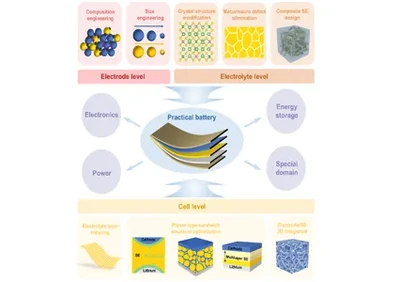 The Qingdao Energy Institute Has Published a Review on the Breakthrough in Regulating Multi-level Structures to Overcome the Charge Transmission Bottleneck in Solid-State Lithium Batteries.January 21, 2026Solid-state lithium metal batteries are regarded as the ideal choice for next-generation energy storage technologies due to their high energy density and excellent safety. However, the slow charge tra...view
 EN
EN
 ru
ru